
|
Photos & Videos :: Biography :: Contact |
|
with Belynda Azhaar Classes :: Workshops :: Free Lessons
|
|
Bellydance Classes with Belynda Azhaar
Learn the art of Middle Eastern dance from ANYWHERE in the world! Welcome to the new world of ONLINE INSTRUCTION! If you are interested in attending live online dance classes (Google account required for LIVE classes) then please email Belynda at azhaar@azhaardance.com or contact her via Facebook. 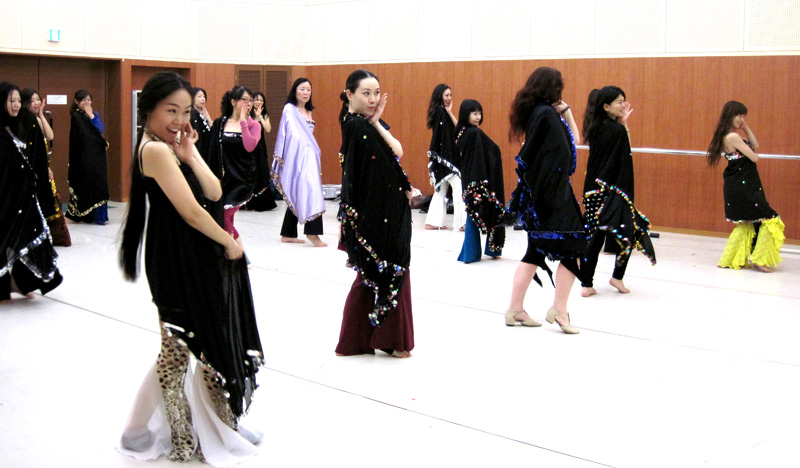 Belynda Azhaar has recently settled in north London and is keen to resume teaching face-to-face dance classes after lockdown. If you are interested in attending dance studio classes in London, please contact Belynda.
BENEFITS OF BELLYDANCE |
|
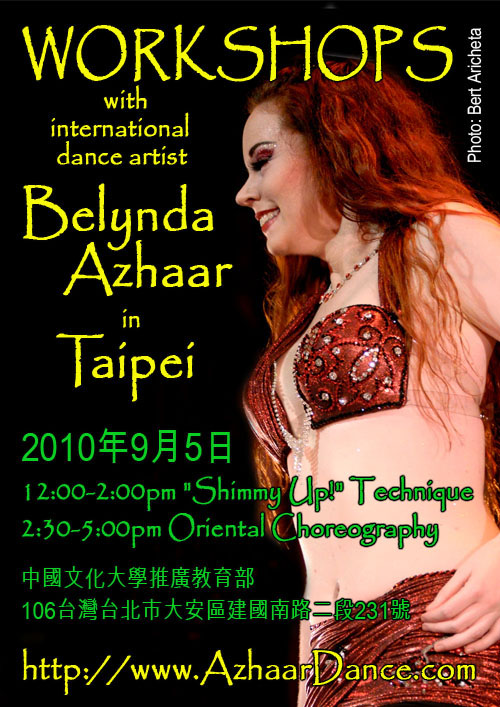
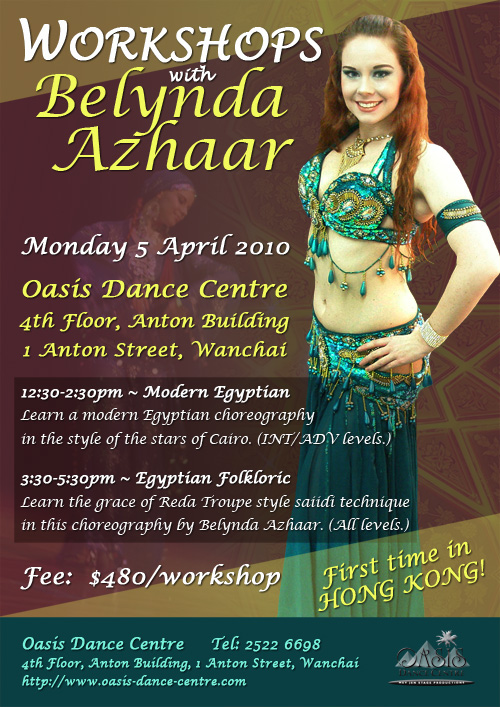
Dance Workshops with Belynda Azhaar
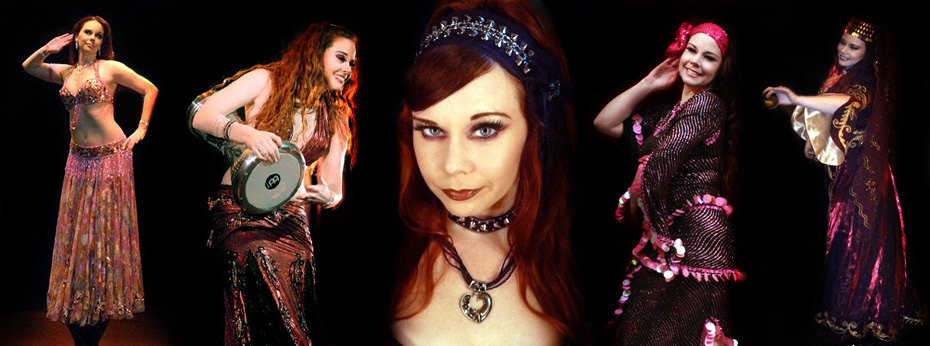
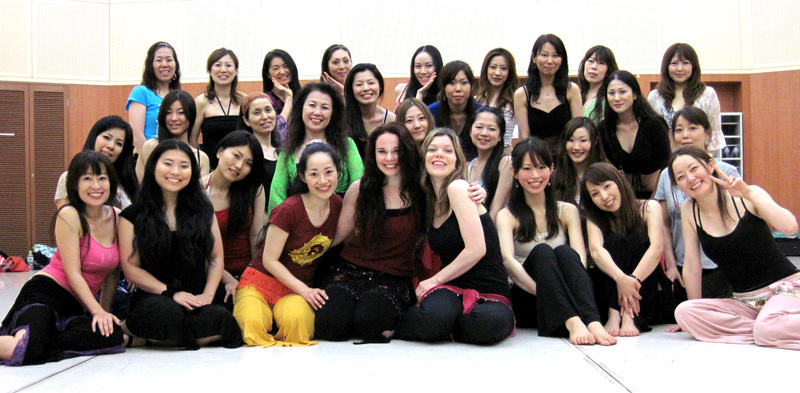 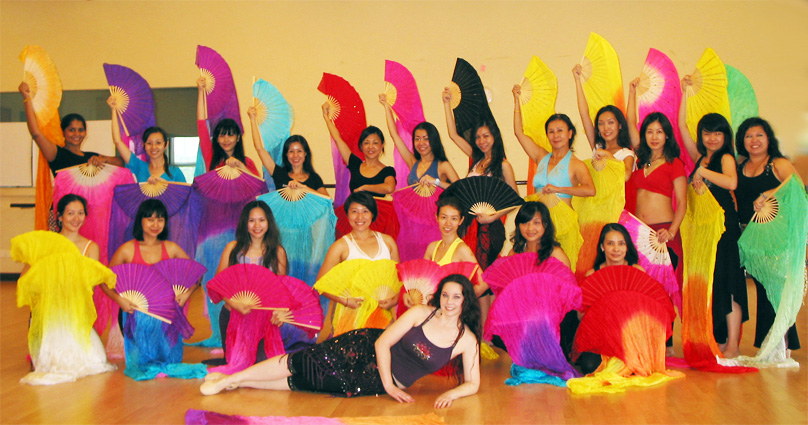 A nurturing and motivational instructor, Belynda Azhaar is known for her warm and friendly yet professional teaching style, strong dance technique, cultural knowledge, improvisational skills, creative choreographies, and ability to communicate effectively with students regardless of any language barrier. (Belynda lived in Asia for 20 years and has experienced a variety of cultures and languages.) 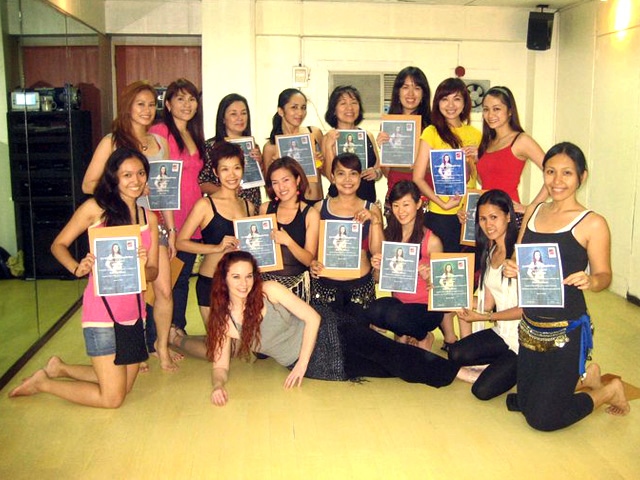 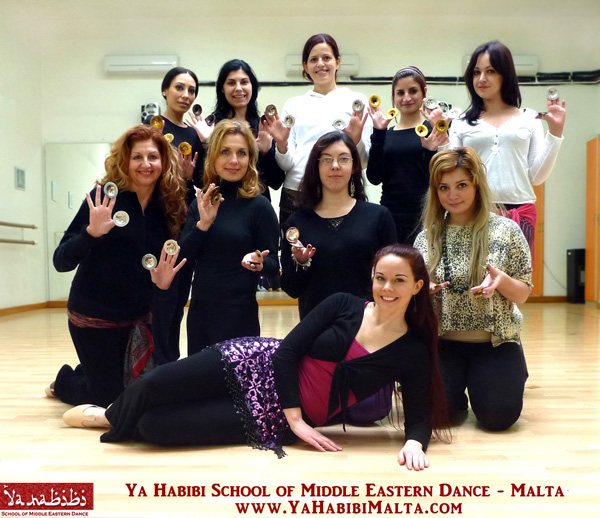 Belynda Azhaar specialises in Egyptian, World Folk, Tribal Fusion, and Theatrical Middle Eastern Dance. She has taught workshops on a wide range of subjects and styles, and can design a workshop according to your needs. 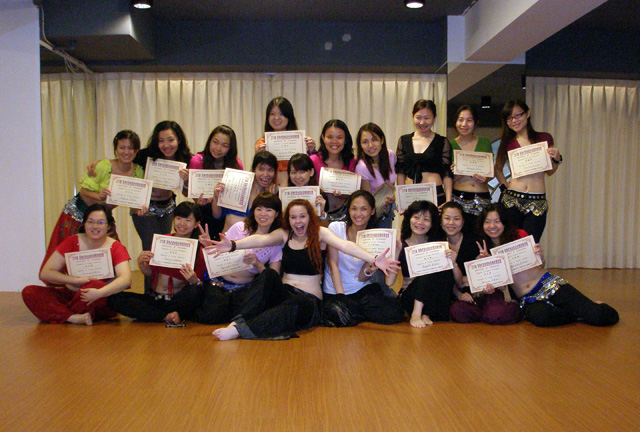 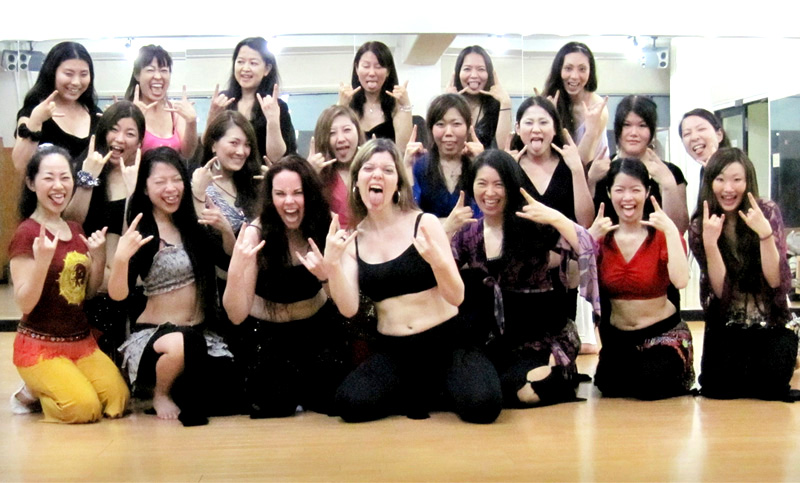
Workshop Topic Suggestions:
• Andalusian/Muwashahat

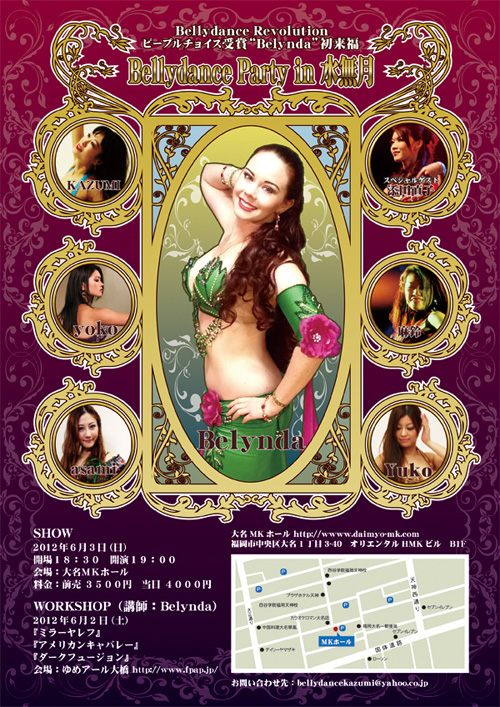
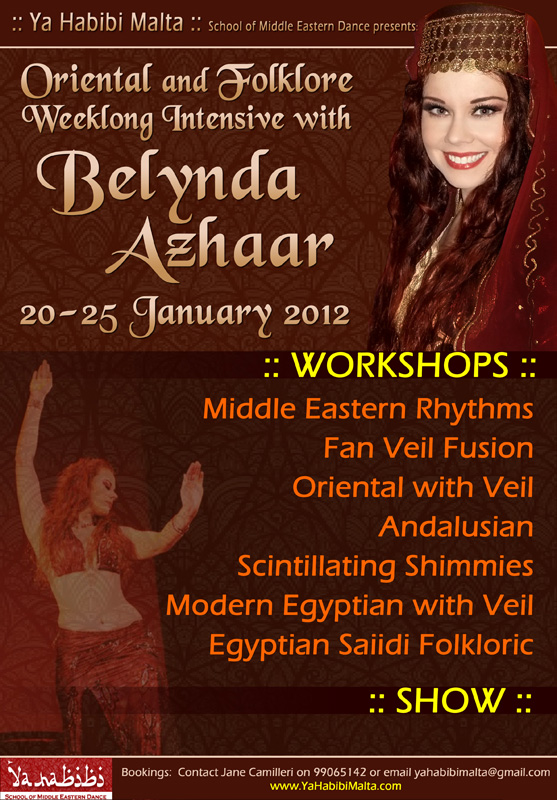

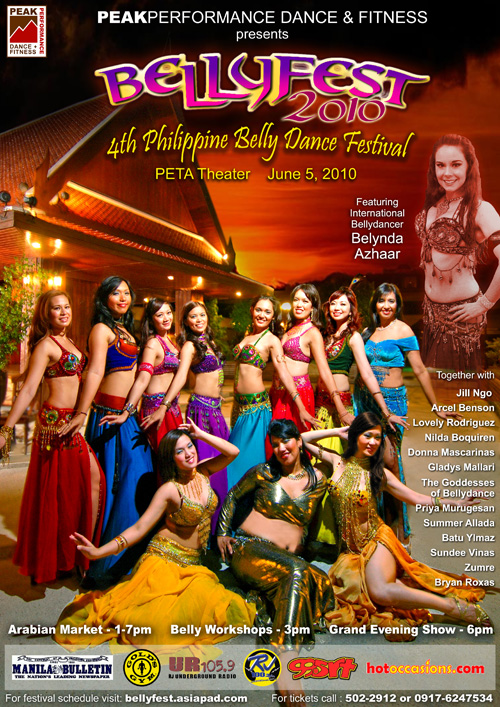
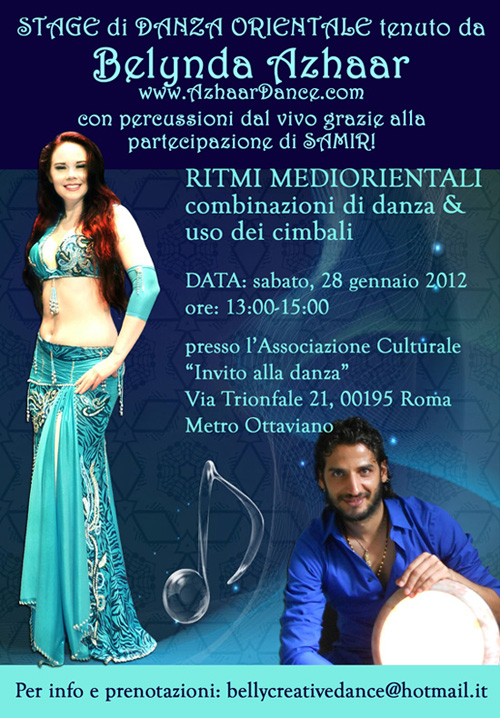
EGYPT SOUTH KOREA MALTA JAPAN HONG KONG TAIWAN CHINA MALAYSIA VIETNAM MONGOLIA INDONESIA PHILIPPINES SWEDEN ITALY
|
|
Feedback on Belynda Azhaar's free online instructional videos: "I always watch a video with a bit of trepidation - but yours 'wow'd' me to bits!! You're extremely talented, graceful, a wonderful dancer and soooo fluid - loved your 'belly dance on a drum' - really wonderful!" "Best hagallah instruction I have seen to date. Thank you." "A remarkably amazing teacher, and an amazing performer too. Thank you, Belynda."
|

|
Helpful Information for StudentsPLEASE NOTE: Students attend dance classes with Belynda Azhaar at their own risk. As with any physical activity, injuries and accidents can happen with dancing. By attending class, students agree that Belynda Azhaar will not be held accountable or responsible for any injuries, accidents, or property damage which may occur. As usual, please consult your doctor before starting any new type of exercise, and please inform Belynda if you have any medical condition. WHAT TO WEAR Comfortable exercise clothing which shows the outline of your body such as yoga pants and a fitted top. (Contrary to what some new dance students might expect, students do not need to show their belly, or indeed any skin, and can be fully covered.) Form-fitted clothing is better so that the instructor can clearly see your movements; as such, students should wear pants/leggings unless the dance style being taught specifically requires a skirt. Some people like to wear a hip scarf, but scarves decorated with coins and/or beads can be a hazard to yourself and others if the decoration falls on the floor and people are dancing barefoot. As such, undecorated hip scarves, or hip scarves with securely fastened decorations, are best. Belynda Azhaar highly recommends the use of dance shoes, however students are free to dance barefoot if they prefer. WHAT TO BRING Notebook, or dance journal, and pen. Drink bottle. Small towel. Dance shoes (if you use them). Any props required for the class, such as veil, finger cymbals, cane, drum, fans, etc. BEHAVIOUR Respect the instructor and fellow students. Avoid disrupting the class. Be on time. Be discrete when entering or exiting the room. Listen attentively. If you have a question, ask the instructor - they are there to help you. Write notes at the end of class or during breaks. Ask the instructor for permission before taking photos or videos. PHOTO/VIDEO POLICY Instructors make their living from teaching. If you video their class and share the footage with your friends or upload it to the internet, you are effectively depriving that instructor of income. Because of this, many instructors do not allow students to video them during class. However, time will often be set aside at the end of choreography workshops for students to film each other.
WORKSHOP A workshop is a one-off class, usually two to three hours in duration, which focuses on a particular topic or choreography. Students pay a higher fee for workshops than they would a regular class, especially if the teacher is not local. There are usually two types of registration/payment offered: advance, or at the door. Discounts are often offered for advance payment. Workshop sizes can range from 10 to 100 or more of students, depending on the venue. The larger the class, the less likely the teacher will be able to give individual attention to students, and the more difficult it is for students to see the teacher. For this reason, Belynda Azhaar prefers 30 or less students in her workshops. MASTER CLASS A master class is a workshop for advanced level and professional dancers. The material taught is more advanced than regular workshops and the student numbers are generally limited to 10-15 students. Master classes are usually 2.5 to 3 hours in duration and the class fee is higher than that of general workshops. DRUM SOLO The drum solo, or tabla solo, is generally the grand finale of a dancer's performance. It is the time when dancers show off their isolation and shimmy skills. FINGER CYMBALS Known as zills, or zils, in Turkish and sagat in Arabic, finger cymbals are small (metal) cymbals worn on the thumbs and middle fingers. Finger cymbals can be single or double-slotted, referring to the type of hole the elastic goes through in the cymbal. Double-slotted cymbals are generally preferred by dancers because they are easier to control than single-slotted cymbals, which tend to move around more. (See picture to the right for an example.) MELAYA LEFF Also called iskanderani (from the erroneous belief that the dance originated in Alexandria), comes from the Arabic words melaya, the name of the large, black shawl that women cover themselves in when going out in public, and leff, which means to wrap. This dance style was created by Mahmoud Reda for the stage, and is now considered a "folk dance" of Egypt. The dance portrays a young woman coyly ignoring the advances of men in public while re-wrapping her melaya which sometimes "accidentally" falls off. Beladi music is used, and the dancer wears a dress and a head scarf. RAKS EL ASSAYA Or raks assaya, literally means Dance of the Stick. Raks assaya is a fun and playful dance where women imitate the male stick dance called tahtib. Tahtib originates from the area in Egypt known as Sa'id (Upper Egypt), and involves men pretending to fight each other with long wooden sticks. Raks assaya is usually performed in a beledi dress to music featuring the saiidi rhythm and mizmar, but has also been incorporated into cabaret bellydance where dancers wear a glitzy two-piece bedlahs (bra and belt costume) and perform to Arab pop music. SA'IDI Also written saidi, literally means "from Sa'id" and can refer to anything originating from Upper Egypt (southern Egypt). The saidi rhythm is a 4/4 rhythm commonly found in saidi music (folk music from Upper Egypt). Saidi dance is a type of Egyptian folkloric dance, and is earthy and energetic. SHA'ABI Also written shaabi, refers to the style of living (including music, dance, clothing, etc.) commonly found in the poorer, lower class areas of Egypt. (The Egyptian upper class generally look down on anything considered shaabi. In fact, it's not unusual for bellydancers performing in restaurants to be prohibited from dancing to shaabi music.) Shaabi music often features Western and electronic instruments and the lyrics, which deal with everyday social issues, are sometimes political, controversial, and/or rude. Well known shaabi artists include Ahmed Adaweyah, Hassan el Asmar, Magdy Talaat, Hakim, and latest shaabi superstar, Saad. In an appropriate match for this style of music, shaabi dancers display a strong, confident, but playful personality, and use moves which are more sexual than found in other forms of Egyptian dance. SHIMMY A shaking or vibration movement driven by the skeleton and/or muscles, and done in time with the music. Shimmy movements usually focus around the hips or shoulders. Common shimmies include the Egyptian (knee) shimmy, the hip shimmy, the 3/4 shimmy, and the shoulder shimmy. Further bellydance related terms and definitions in English can be found here.
|
|
Photos & Videos :: Biography :: Contact |